
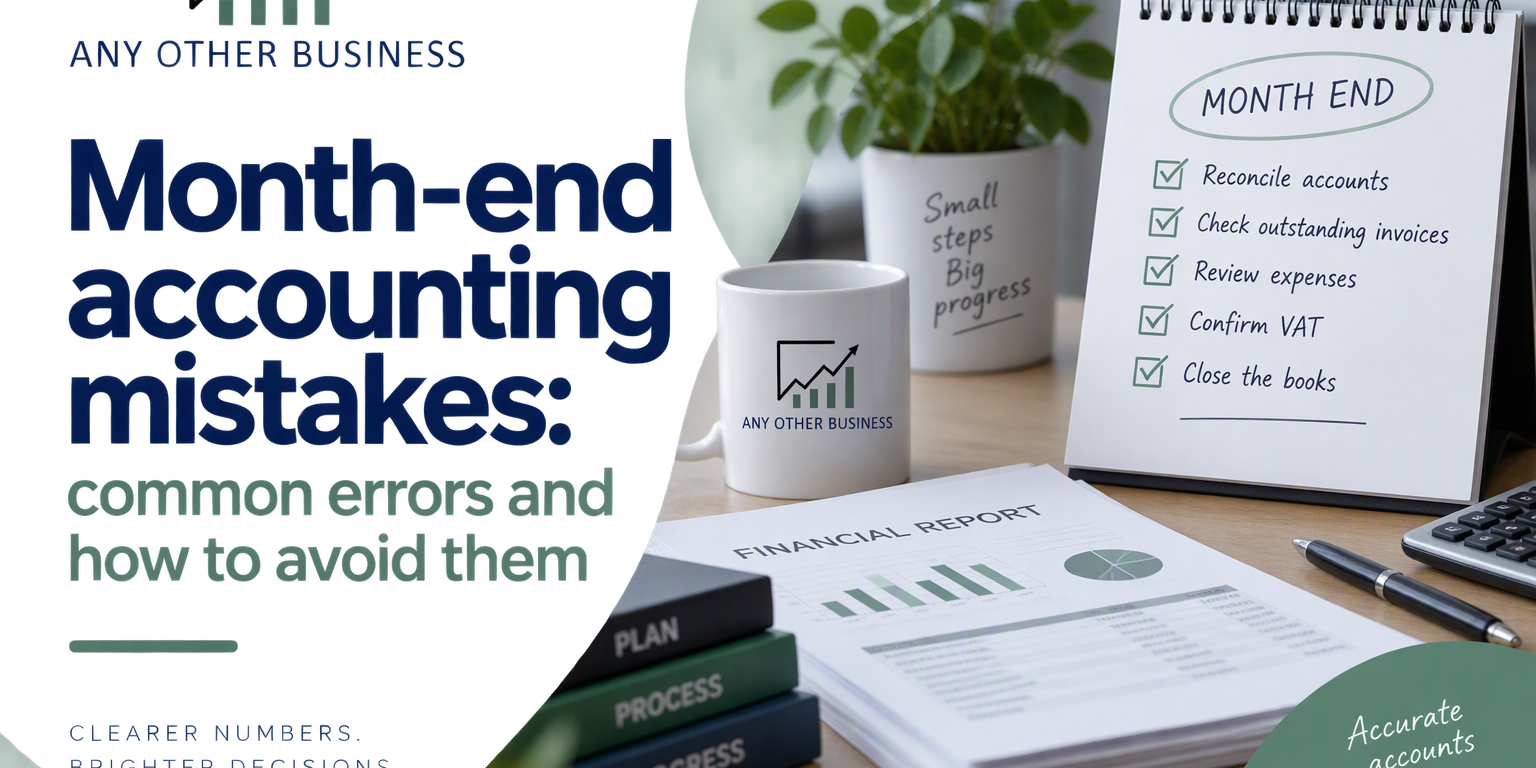
For many small business owners, month-end can feel like a race against the clock. You’re trying to close the books, understand your financial position, and prepare for the month ahead, all while continuing to run the business. Unfortunately, even small accounting mistakes at month-end can lead to inaccurate reports, cash flow surprises, and costly decisions.
The good news is that most month-end errors are entirely avoidable with a consistent process and a little attention to detail. Here are some of the most common mistakes businesses make and practical ways to prevent them.
1. Not Reconciling Bank Accounts
One of the biggest mistakes is assuming that the bank balance shown in your accounting software matches your actual bank account.
Transactions can be duplicated, omitted, recorded incorrectly, or still be awaiting clearance. If your accounts aren’t reconciled, your financial reports may be unreliable.
How to avoid it:
- Reconcile all bank accounts monthly.
- Investigate any unreconciled transactions immediately.
- Ensure the closing balance in your accounting software matches the bank statement exactly.
Regular reconciliation provides confidence that your reported figures are accurate.
2. Missing Supplier Invoices
Many businesses record invoices only when they’re paid rather than when they’re received. This can result in expenses being recorded in the wrong month and profits appearing higher than they actually are.
How to avoid it:
- Review all supplier emails and paperwork before month-end.
- Record invoices as soon as they are received.
- Maintain a system for tracking invoices awaiting approval or payment.
Accurate recording ensures your profits and liabilities are correctly reported.
3. Forgetting Accruals and Prepayments
Expenses and income don’t always fall neatly within calendar months. Insurance, software subscriptions, professional fees, and annual contracts may cover multiple accounting periods.
Without accruals and prepayments, your financial statements can become distorted.
How to avoid it:
- Review significant expenses at month-end.
- Identify costs that relate to future periods.
- Spread annual or large payments across the appropriate accounting periods.
This provides a more accurate view of business performance.
4. Failing to Review Outstanding Customer Balances
Many business owners focus on sales figures but overlook unpaid invoices.
A profitable business can still struggle with cash flow if customers are not paying on time.
How to avoid it:
- Review your aged receivables report each month.
- Chase overdue invoices promptly.
- Set up automated reminders where possible.
- Consider credit control procedures for persistent late payers.
Improving collections often has a greater impact on cash flow than increasing sales.
5. Incorrect VAT Coding
VAT errors can occur surprisingly easily, particularly when dealing with unusual purchases, overseas suppliers, or mixed-use expenses.
Incorrect VAT coding can lead to inaccurate VAT returns and potential issues during an HMRC inspection.
How to avoid it:
- Use the correct VAT code for every transaction.
- Review unusual transactions carefully.
- Seek advice if you’re unsure about VAT treatment.
- Run a VAT exception report before submitting returns.
It’s far easier to correct an error before submission than after.
6. Not Reviewing Suspense or Uncategorized Transactions
Accounting software often makes it easy to leave transactions sitting in suspense, “uncategorised”, or temporary accounts.
These balances can quietly build up over time and eventually compromise the accuracy of your accounts.
How to avoid it:
- Review suspense and uncategorised accounts every month.
- Allocate transactions to the correct nominal codes.
- Avoid carrying unexplained balances from one month to the next.
Every transaction should have a clear and logical home.
7. Forgetting Payroll Journals
If payroll is processed outside your accounting software, it’s easy to forget to enter payroll journals or reconcile wages correctly.
This can result in staff costs, PAYE liabilities, and pension contributions being understated.
How to avoid it:
- Create a payroll checklist.
- Ensure payroll journals are posted every month.
- Reconcile PAYE and pension accounts regularly.
Your payroll records should agree with your accounting records at all times.
8. Rushing the Month-End Process
Perhaps the most common mistake of all is rushing.
When month-end becomes a box-ticking exercise, errors can slip through unnoticed. Small inaccuracies often compound over time and become more difficult to identify later.
How to avoid it:
Create a standard month-end checklist that includes:
- Bank reconciliations
- Supplier invoice reviews
- Customer debt reviews
- Payroll checks
- VAT verification
- Accruals and prepayments
- Review of suspense accounts
- Financial report analysis
A documented process improves consistency and reduces the likelihood of mistakes.
Why a Proper Month-End Matters
The purpose of month-end isn’t simply to keep your accountant happy. Accurate month-end procedures provide valuable information about the health of your business.
When your records are up to date and reliable, you can:
- Make better business decisions.
- Monitor profitability accurately.
- Improve cash flow management.
- Prepare for tax obligations with confidence.
- Identify problems before they become significant issues.
Final Thoughts
Month-end accounting doesn’t need to be stressful. Most common mistakes stem from inconsistent processes rather than a lack of financial knowledge. By following a structured month-end routine and addressing issues promptly, you’ll gain a clearer picture of your business finances and spend less time fixing problems later.
At Any Other Business, we help business owners maintain accurate records, streamline their bookkeeping processes, and gain confidence in their financial reporting. If you’d like support with your month-end bookkeeping or accounting systems, get in touch to see how we can help.